

Cosmic Discovery: Astronomers Detect First Violent Exoplanet Stellar Storm Outside The Sun

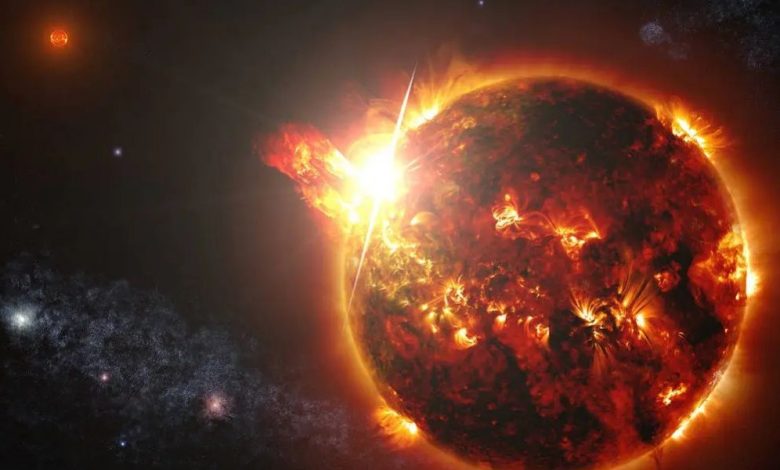
Data To Change Search For Life: The Blast Was Powerful Enough To Completely Erase Nearby Planetary Atmospheres
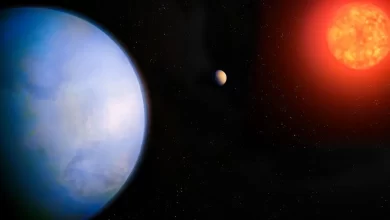
WASHINGTON, USA – Astronomers have announced the detection of a stellar storm of unprecedented violence on a star outside our Solar System. This groundbreaking discovery not only deepens our knowledge of stellar dynamics but also redraws the boundaries of habitability for exoplanets. The Exoplanet Stellar Storm released energy capable of completely and irreversibly stripping the atmosphere from any nearby planet.
💥 INTENSITY OF THE CATASTROPHE AND ATMOSPHERIC DESTRUCTION
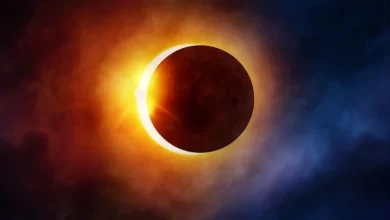
Our Sun also produces Coronal Mass Ejections (CMEs) from time to time, but this observed event went far beyond known solar activity.
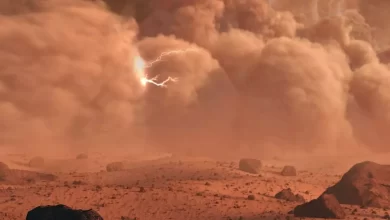
- Destructive Power: According to researchers, the detected eruption was so powerful and energetic that it could have completely and irreversibly stripped the atmosphere (the primary condition for life) from any close-orbiting planet, dragging it into space.
- The Unseen Threat: Such violent eruptions are common on young and active stars. Consequently, this finding highlights the reality that even planets located in the habitable zone (Goldilocks Zone) may have been sterilized due to their star’s aggressive activity.
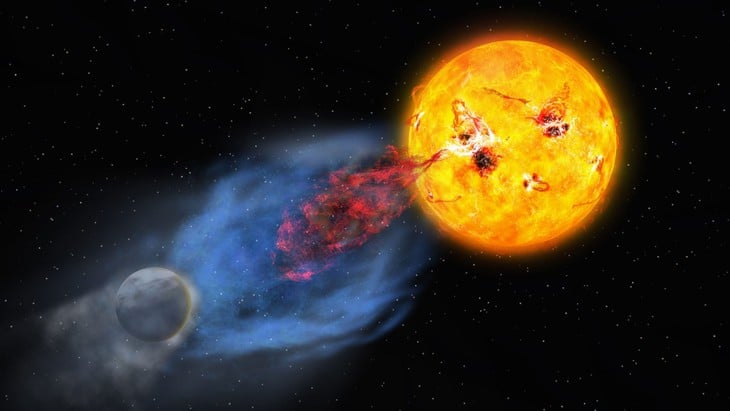
🔭 EARTH AND THE SUN’S SHIELDING MECHANISM
While mass ejections from the Sun occasionally reach Earth, they produce noticeable effects:
- Earth Interaction: Solar storms can affect satellites, cause disruptions in communication networks, and interact with our magnetic field to create auroras (Northern and Southern Lights).
- Our Shield: However, Earth’s strong magnetic field and atmosphere largely prevent these energetic particles from reaching the surface. This situation demonstrates how well protected Earth is against the Sun’s typical storms.
💡 HABITABILITY AND NEW CRITERIA
The first observation of an Exoplanet Stellar Storm of this magnitude establishes new and urgent criteria for exoplanet researchers.
- New Criteria: In the search for life, it is no longer sufficient for a planet just to orbit in the correct temperature range (where liquid water can exist). Furthermore, the planet must possess its own magnetic field strong enough to protect its atmosphere against these stellar eruptions. In conclusion, this discovery proves that the search for life is related not only to distance but also to the star’s “temperament.”